
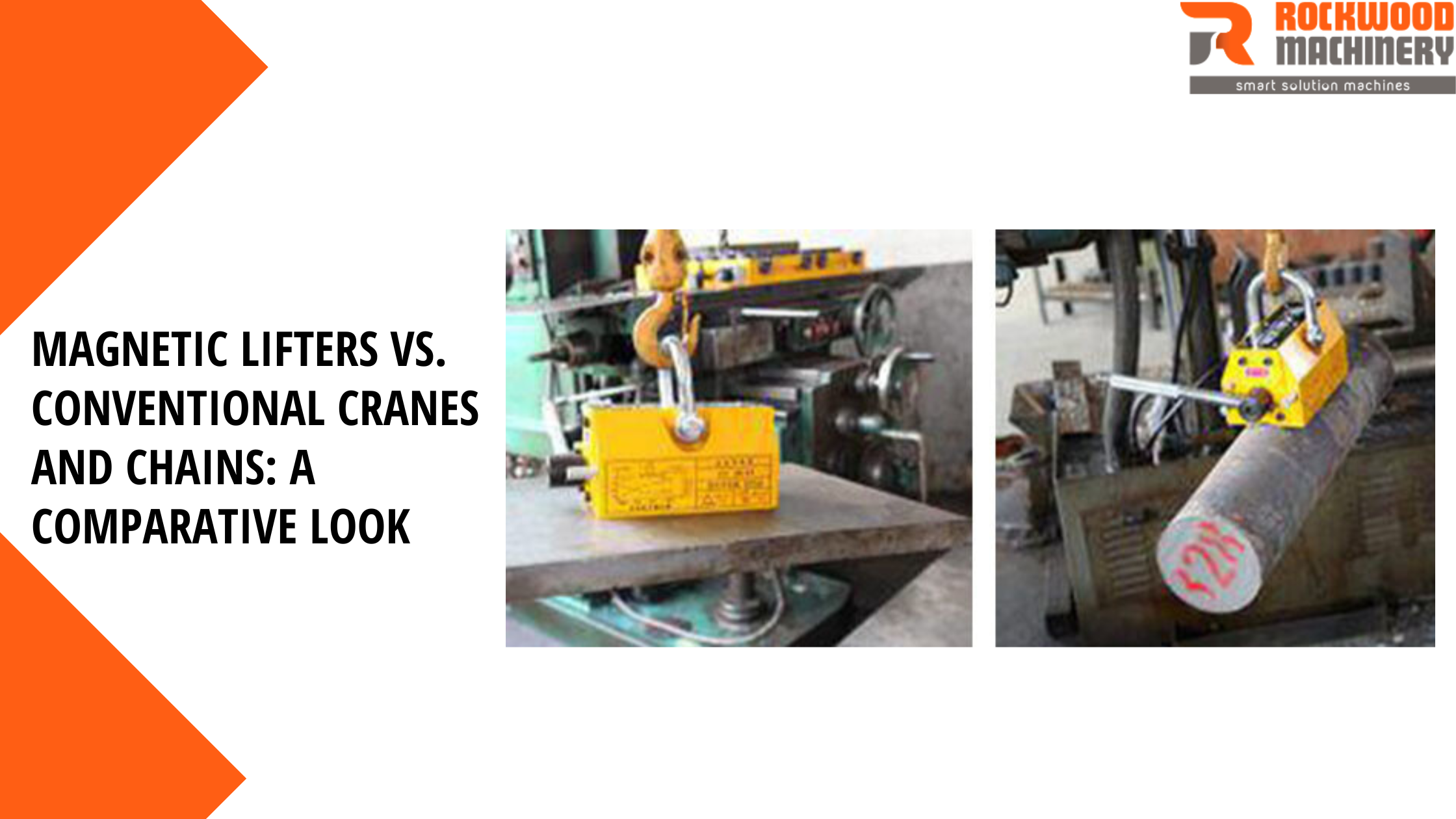
With the rapidly growing demand for effective, safe, and accurate material handling in today’s industrial operations, never has there been a greater need to manage these transitions smoothly. Whether it’s lifting heavy steel plates, machine components, or cylindrical materials, the choice of lifting equipment can greatly influence productivity and workplace safety. Two of the most common options in workshops and fabrication units are magnetic lifters and conventional cranes with chains. Both magnetic lifters and cranes/chains have the same functional purpose, changing heavy materials vertically and horizontally, but experience different working wheels with different efficiency ratings and general performance.
Ultimately, this blog compares magnetic lifters and cranes/chains throughout this introduction based on advantages, disadvantages, and appropriate use cases in order to provide a better understanding for professional settings.
1. An Introduction to Magnetic Lifters
Magnetic lifters are equipped with powerful permanent magnets or electromagnets, allowing them to lift ferrous material without relying on slings, hooks, or clamps. They are designed to handle heavy loads with minimal manual intervention, making them a favorite in industries where speed and safety are paramount.
Modern magnetic lifters in UAE come equipped with advanced magnetic circuits that provide consistent lifting power while ensuring the safety of operators. These lifters are compact, easy to operate, and require little to no maintenance. Whether used in steel fabrication shops or CNC machining units, magnetic lifters make handling steel sheets, plates, and parts smoother and more efficient.
2. Conventional Cranes and Chains: The Traditional Workhorse
Cranes and chains have long been the backbone of industrial lifting. They operate using mechanical hooks and chains connected to a hoist or crane system, allowing for the lifting of a wide variety of materials.
While they are capable of handling massive loads, cranes and chains require more setup time, regular inspection, and skilled operation. Additionally, they often involve multiple workers to ensure proper attachment, balancing, and positioning of materials, introducing the possibility of human error and safety risks.
3. Key Differences Between Magnetic Lifters and Conventional Systems
a. Efficiency and Speed
Magnetic lifters offer unmatched efficiency. A single operator can lift and move materials quickly without the need for clamps or chains. This reduces downtime and speeds up operations—especially in high-volume environments such as fabrication workshops or machine shops.
In contrast, cranes and chains require more setup time and often involve multiple steps, making them less efficient for repetitive lifting tasks.
b. Safety and Reliability
Safety is a major consideration in industrial environments. Magnetic lifters have built-in safety mechanisms, such as locking handles and magnetic holding power that remains even during power failures (in permanent magnet types). This eliminates the risk of load drops due to mechanical failures.
Conventional cranes and chains, however, rely heavily on the condition of the chains, hooks, and slings. Any wear or improper attachment can lead to serious accidents.
c. Maintenance and Operational Costs
Magnetic lifters are low-maintenance tools. They do not require oiling, lubrication, or constant adjustment, making them more cost-effective in the long run.
Conventional cranes and chain systems demand regular inspection, servicing, and replacement of worn components—adding to the operational expenses over time.
d. Precision and Control
In workshops where accuracy is critical—such as those using CNC drilling machines—precise material handling is essential. Magnetic lifters allow smooth, controlled placement of materials without surface damage, which is crucial when working with machined components or delicate sheet metals.
Cranes and chains, while powerful, can sometimes cause scratches or dents due to the use of metal hooks and chains, making them less ideal for precision applications.
e. Flexibility and Portability
Magnetic lifters are compact and easy to relocate across different work areas. They can be affixed to cranes, hoists, or possibly even a forklift, depending on the job. Their versatility makes them a great choice for workshops that are working with lots of materials and in a limited space.
Cranes, on the other hand, are often fixed installations, and moving them between workstations requires more effort and downtime.
4. Which One Should You Choose?
The best choice will depend on your unique operational requirements.
- If your business demands speed, precision, and safety, magnetic lifters are the clear winner.
- If you handle irregularly shaped or non-ferrous materials, conventional cranes and chains might still be necessary.
- For workshops that use CNC drilling machines, magnetic lifters can enhance workflow by enabling quick, damage-free lifting of steel components.
5. The Smart Move for Modern Workshops
As industries in the UAE continue to modernize, adopting advanced lifting technologies has become essential. Magnetic lifters not only improve operational efficiency but also contribute to a safer and cleaner work environment—reducing the dependency on complex rigging systems.
Rockwood Machinery is a reputable supplier of magnetic lifters and is the supplier of choice for businesses seeking high-quality, dependable solutions. Known for delivering precision-engineered equipment and being a leading CNC drilling machine supplier in the UAE, Rockwood Machinery ensures that every product meets the highest standards of performance and durability—empowering workshops to handle materials smarter, faster, and more safely.
To continue reading, click: Crafting Perfection Through Advanced Steel Engraving Machines