
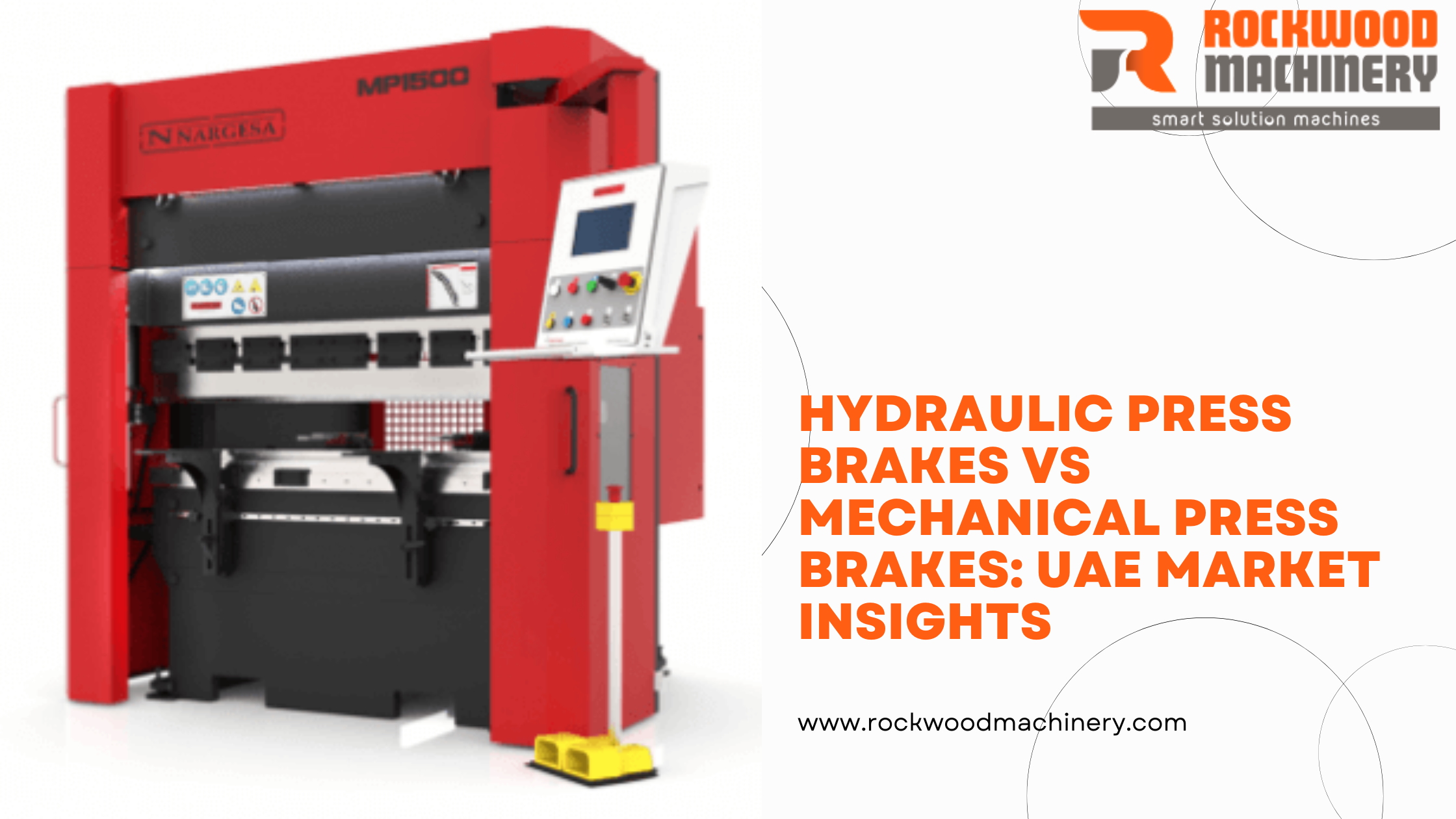
In the realm of metal fabrication, the key to success is determined by precision, speed, and reliability. Press brakes, an essential part of any fabrication workshop, play a vital role in bending sheet metal into accurate shapes for countless applications—from construction and automotive to heavy machinery and infrastructure projects. In the UAE, where industries are rapidly modernizing and expanding, businesses often face a common question: Which press brake is the better choice—hydraulic or mechanical? The distinction in press brakes depends on their differences, advantages, and compatibility with the local market.
This blog explores the comparison between Hydraulic press brakes and mechanical press brakes, helping businesses align their choices with their production needs and long-term goals.
Mechanical Press Brakes: Tried and Tested
Mechanical press brakes have been used for decades, valued for their simplicity and reliability. They operate on a flywheel mechanism powered by a motor, which stores energy and releases it during the bending cycle.
Advantages of Mechanical Press Brakes:
- High Speed – Mechanical press brakes can perform cycles faster than many hydraulic counterparts, making them suitable for high-volume production.
- Consistency – They deliver uniform bends, as long as the material thickness and job requirements are consistent.
- Durability – Mechanical systems have fewer electronic components, which often makes them easier to maintain in traditional workshops.
Limitations of Mechanical Press Brakes:
- Limited Flexibility – Mechanical presses are less adaptable to complex bending requirements or varying materials.
- Safety Concerns – Due to their mechanical drive, once the stroke begins, it cannot be reversed, increasing the risk of accidents.
- Precision Challenges – Achieving micro-adjustments or bends in varied thicknesses can be difficult, limiting their use in advanced fabrication.
Hydraulic Press Brakes: The Current Trend
Hydraulic press brakes in UAE apply pressure using hydraulic cylinders. They provide more control, safety, and flexibility. They have become the global standard for workshops requiring precision and versatility.
Advantages of Hydraulic Press Brakes:
- Superior Precision – Hydraulic systems allow operators to control pressure and stroke depth with great accuracy, ensuring consistent results even with diverse materials.
- Enhanced Safety – Operators can stop or reverse a stroke mid-process, reducing risks and preventing material damage.
- Flexibility – Suitable for a wide range of applications, from thin sheets to heavy-duty metal plates, making them ideal for industries in the UAE where projects vary in scale.
- Automation Integration – Modern hydraulic press brakes often come with CNC (Computer Numerical Control) systems, enabling automated programming, repeatable bends, and increased efficiency.
Limitations of Hydraulic Press Brakes:
- Slower Cycle Speed – Compared to mechanical models, they can sometimes be slower, though advanced models have significantly closed this gap.
- Maintenance Requirements – Hydraulic systems require regular checks for fluid, seals, and pumps, but with proper upkeep, they deliver long-term performance.
UAE Market Insights: Shaping Industrial Choices
The UAE’s fabrication industry is evolving rapidly, fueled by infrastructure projects, oil and gas investments, and a growing focus on renewable energy and construction. In this dynamic environment, the choice between hydraulic and mechanical press brakes depends on a workshop’s scale, type of work, and vision for growth.
- For High-Volume Production: Traditional workshops handling repetitive jobs at high speed may still prefer mechanical press brakes. Their quick cycles and durability provide a cost-effective solution for consistent tasks.
- For Precision and Versatility: Most modern UAE workshops are leaning toward Hydraulic press brakes, as they provide flexibility, CNC automation, and safety—all crucial in meeting diverse and complex customer demands.
Furthermore, manufacturing industries in the UAE are placing greater emphasis on efficiency, safety in the workplace, and the introduction of advanced technologies. This trend points toward hydraulic press brakes becoming the dominant choice in the coming years.
Beyond Press Brakes: Comprehensive Workshop Solutions
The success of a fabrication business doesn’t rely on press brakes alone. In addition, workshops require reliable suppliers to provide consumables and accessories that minimize disruptions. For instance, having a reliable insulation pin supplier is essential for industries involved in HVAC, construction, and energy projects. These pins, though small, play a critical role in insulation fastening and energy efficiency—further highlighting how choosing the right suppliers directly impacts overall performance and productivity.
Final Thoughts
Choosing between hydraulic and mechanical press brakes ultimately depends on your business goals. Mechanical press brakes are ideal for workshops prioritizing speed and simple, repetitive tasks. In contrast, hydraulic press brakes deliver the precision, flexibility, and automation capabilities that align with the UAE’s vision of modernized industries.
For businesses looking to stay ahead, the future lies in advanced, efficient, and safe solutions—qualities best embodied by hydraulic press brakes.
When it comes to sourcing reliable fabrication machinery and workshop essentials, Rockwood Machinery is the trusted supplier in UAE. With a strong reputation for delivering cutting-edge hydraulic press brakes, along with being a dependable insulation pin supplier, Rockwood ensures that businesses have the tools and support they need to grow in a competitive market.
To continue reading, click: How Hydraulic Shear Machines Are Transforming Sheet Metal Fabrication