
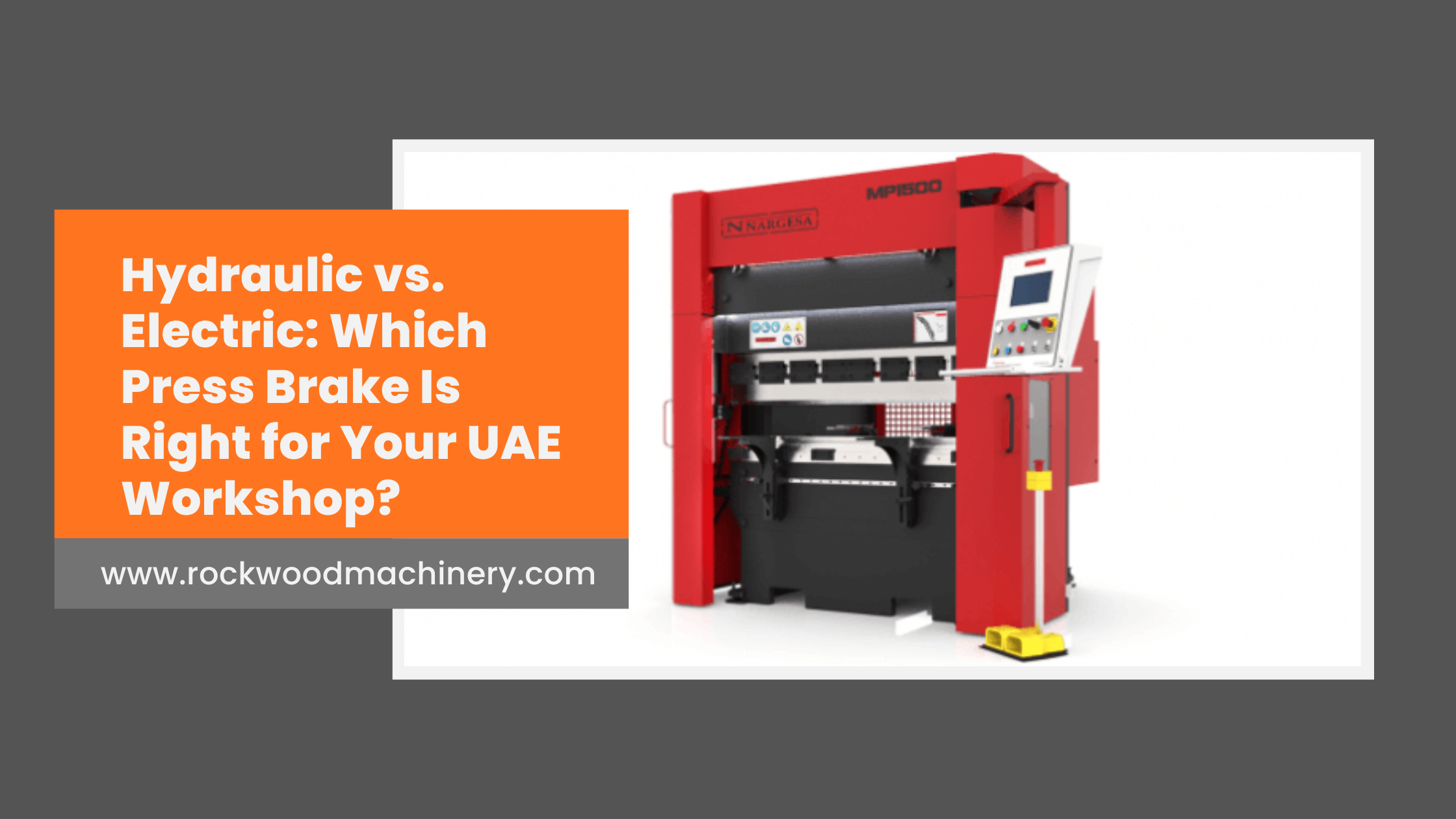
In the metal fabrication industry, precision, power, and efficiency define success. When it comes to bending metal sheets accurately, the press brake remains a crucial piece of machinery in every workshop. However, choosing between a hydraulic press brake and an electric press brake can be a challenge—especially in the UAE, where industries demand both power and sustainability. Understanding the strengths and limitations of each will help you make an informed decision for your workshop.
Understanding the Basics: Hydraulic and Electric Press Brakes
A hydraulic press brake operates using hydraulic cylinders that apply force through fluid pressure. This design has been a long-standing favorite for heavy-duty metal forming tasks, providing consistent performance and reliability.
On the other hand, electric press brakes, also known as servo-electric press brakes, use a motor-driven ball screw mechanism instead of hydraulic oil. These machines are known for their energy efficiency, speed, and accuracy, making them ideal for workshops aiming to reduce energy consumption and maintenance costs.
Both options have revolutionized the metal fabrication industry, but their suitability depends on your workshop’s production requirements, material types, and sustainability goals.
1. Power and Performance: Hydraulic Press Brakes Take the Lead
When it comes to handling thick and heavy metal sheets, hydraulic press brakes in UAE remain unmatched. Their high tonnage capacity allows them to bend strong materials like steel and aluminum with ease. For workshops in the UAE involved in large-scale construction or heavy equipment manufacturing, the hydraulic option is often the go-to.
Hydraulic systems can maintain consistent pressure throughout the bending process, ensuring uniform results even in high-volume production. While they may consume more energy compared to electric models, their robust power output justifies their use for demanding applications.
2. Precision and Efficiency: Electric Press Brakes Shine
In contrast, electric press brakes offer superior precision, repeatability, and speed. Their motor-driven system allows for smoother and faster bending operations, often achieving accuracy within microns. This level of precision is essential for industries that require intricate bending of thinner materials, such as electrical enclosures, stainless steel panels, and decorative metalwork.
Moreover, electric press brakes operate silently and cleanly, eliminating the need for hydraulic fluids that can leak or degrade over time. Workshops in the UAE that prioritize energy efficiency and sustainability find this an attractive option, especially with the region’s growing emphasis on green manufacturing.
3. Maintenance and Operational Costs: Electric Wins on Efficiency
Hydraulic press brakes require regular maintenance—changing hydraulic oil, inspecting seals, and monitoring pressure systems. These tasks ensure longevity but can increase operational costs over time.
In comparison, electric press brakes have fewer moving parts and no hydraulic fluid system, significantly reducing maintenance needs. This translates to lower downtime and cost savings in the long run. Additionally, since electric systems consume energy only during motion, they are far more efficient, making them ideal for UAE workshops looking to optimize power usage amid rising energy costs.
4. Speed and Productivity: Balancing Power and Precision
Speed is crucial in modern fabrication. While hydraulic press brakes deliver steady performance for heavy tasks, electric press brakes are faster in setup and cycle times, enhancing productivity for lighter or repetitive operations.
Some workshops even opt for hybrid models that combine the best of both worlds—hydraulic power with electric precision—offering versatility for a wide range of metalworking needs.
5. Environmental Impact: The Electric Advantage
In today’s eco-conscious manufacturing environment, sustainability is more than just a buzzword—it’s a business requirement. Electric press brakes, being energy-efficient and oil-free, contribute to a cleaner and greener workspace.
For UAE-based workshops aligning with the nation’s sustainability goals, switching to electric bending machines in UAE could be a forward-thinking choice. Not only do they reduce environmental footprint, but they also enhance workplace safety and reduce noise pollution.
6. Cost Considerations: Choosing the Right Investment
Hydraulic press brakes generally come with a lower upfront cost, making them appealing for businesses focusing on heavy-duty work and long-term durability. However, electric press brakes, despite their higher initial price, often provide better ROI due to lower energy consumption, minimal maintenance, and increased operational efficiency.
Therefore, the best choice depends on your production priorities—whether it’s raw power or long-term savings.
Which Press Brake Should You Choose for Your UAE Workshop?
If your workshop primarily deals with thick materials, structural steel, or large components, a hydraulic press brake will deliver the strength and durability you need. However, if you prioritize precision, energy efficiency, and reduced maintenance, investing in an electric press brake is the smarter option.
For many UAE workshops, the choice often comes down to a balance between performance requirements and operational costs. Assessing your current workload, energy consumption, and sustainability goals will guide you to the right decision.
Partner with the Experts – Rockwood Machinery
Whether you’re looking for Hydraulic Press Brakes in UAE or high-performance Bending Machines in UAE, choosing the right supplier makes all the difference. Rockwood Machinery offers a wide range of advanced metal fabrication solutions designed to boost productivity, precision, and performance. With a proven track record in serving the UAE’s industrial sector, Rockwood Machinery ensures your workshop is equipped with reliable, efficient, and future-ready machines to meet your bending and forming needs.
To continue reading, click: 7 Maintenance Tips for Stud Welding Machines in UAE’s Harsh Climate