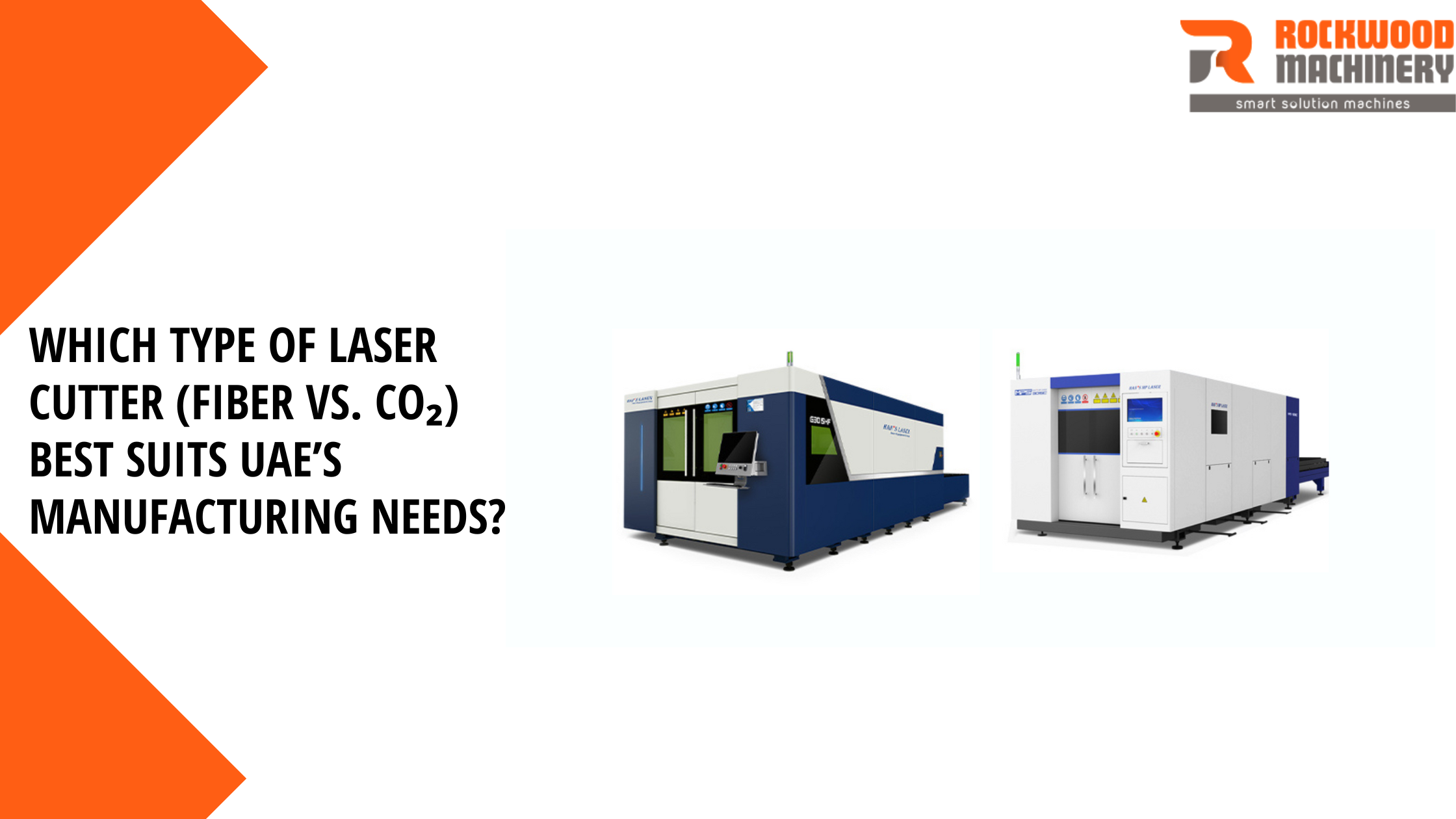
The UAE’s manufacturing landscape is evolving at a remarkable pace. From metal fabrication facilities in Dubai and Abu Dhabi to signage, automotive, marine, and construction industries across the Emirates, businesses are rapidly adopting advanced machinery to boost quality, speed, and efficiency. Among these technologies, laser cutting machines have become essential tools, helping workshops deliver precision and productivity like never before.
But with two major types—Fiber Laser Cutters and CO₂ Laser Cutters—the big question remains: Which one is right for your UAE manufacturing operation?
This guide breaks down the utilities, limitations, and situations in which they are best suited to gain some clarity when businesses invest in their machinery.
Understanding the Two Key Technologies
1. Fiber Laser Cutting Machines
Fiber lasers utilize solid-state laser light generated by diodes and delivered through fiber-optic cables. They are characterized by high precision, low cost of operation, and high energy efficiency.
2. CO₂ Laser Cutting Machines
CO₂ lasers generate a beam through electrically stimulated gas mixtures. They are versatile, especially for non-metal materials, and have been widely used for decades in industries requiring smooth finishes.
How UAE’s Industry Needs to Shape the Choice
The UAE’s industrial requirements differ from many global markets due to factors like extreme temperatures, high demand in metal fabrication, and growing automation trends. Let’s compare Fiber vs. CO₂ lasers based on UAE-specific needs.
1. Material Compatibility: What Are You Cutting Most?
Fiber Laser—Best for Metals
Fiber lasers dominate when it comes to cutting metal, including:
- Stainless steel
- Mild steel
- Aluminum
- Copper
- Brass
With high beam absorption and fast cutting speeds, fiber cutters are ideal for workshops specializing in metal fabrication, structural components, industrial machinery, and bending machines in UAE operations where sheet metal processing is routine.
CO₂ Laser—Best for Non-Metals
CO₂ lasers outperform fiber when working with:
- Wood
- Acrylic
- Leather
- Plastics
- Textiles
- Glass
Businesses in signage, interior décor, packaging, and creative industries still rely heavily on CO₂ laser cutting machines.
2. Speed and Efficiency: Fiber Leads the Race
In UAE’s high-demand markets—construction, oil & gas, and industrial fabrication—speed is crucial.
Fiber Lasers Provide:
- Cutting of thin and medium-thickness metals is up to 3x faster.
- Rapid piercing times
- Minimal downtime
- Higher energy efficiency
Most modern metalworking workshops prefer fiber lasers due to their unmatched speed and low cost-per-cut.
CO₂ Lasers Offer:
- Good speeds on thicker non-metals
- Slower performance on metals compared to fiber
If your workflow is primarily non-metal materials, CO₂ still remains a strong and efficient choice.
3. Operating Cost: Fiber Is More Affordable Long-Term
Operating cost is where fiber truly shines.
Fiber Laser Benefits
- No mirrors or complex alignment systems
- Lower electricity consumption
- Nearly maintenance-free
- High lifespan of fiber modules
These factors significantly reduce operational expenses—a key advantage in a market like the UAE where energy and uptime directly impact profitability.
CO₂ Laser Drawbacks
- Higher power consumption
- Requires regular maintenance
- Mirror alignment and gas refill costs
For businesses looking to lower lifetime operating costs, fiber laser machines are hard to beat.
4. Cutting Quality: Both Excellent, But for Different Jobs
Fiber Laser Quality
Fiber lasers deliver crisp, clean cuts on metal, particularly on thin sheets. Modern fiber machines also handle thick materials exceptionally well with innovations like beam shaping.
CO₂ Laser Quality
CO₂ lasers produce ultra-smooth edges on non-metals—something fiber cannot replicate. For industries like signage and décor, CO₂ still holds a clear advantage in finishing quality.
5. Environmental Conditions in UAE: Fiber Performs Better
The UAE’s climate stresses machinery due to:
- Extreme heat
- Fine dust
- Humidity variations
Fiber lasers, with their closed and sealed systems, offer better durability and stability in such environments. Because CO₂ lasers have open optical paths, they are more sensitive to dust and fluctuations in temperature.
So, Which One Should You Choose?
Choose a Fiber Laser Cutter If You:
✔ Work mostly with metals
✔ Need high speed and precision
✔ Want lower maintenance costs
✔ Aim for long-term ROI
✔ Operate in industrial fabrication or sheet metal processing
This is why fiber lasers are becoming the leading laser cutting machines in UAE across workshops, fabrication plants, and manufacturing facilities.
Choose a CO₂ Laser Cutter If You:
✔ Work mainly with non-metal materials
✔ Require the smoothest edge finishes
✔ Are in signage, décor, furniture, or creative manufacturing
✔ Need versatility across multiple non-metal substrates
Final Verdict
Both Fiber and CO₂ laser cutting machines serve vital roles in the UAE’s growing manufacturing sector. The best choice depends on your materials, performance expectations, and long-term production goals. While fiber lasers dominate metal fabrication thanks to speed, durability, and efficiency, CO₂ lasers remain indispensable for businesses working with non-metal materials requiring smooth finishes.
As industrial development accelerates across the Emirates, choosing the right laser machine can elevate your workshop’s quality, productivity, and competitiveness.
If your process also involves forming or reshaping metal, pairing the right laser cutter with bending machines in UAE ensures a complete, high-performance fabrication workflow—perfectly aligned with the country’s modern manufacturing demands.
To know more, click: Hydraulic vs. Electric: Which Press Brake Is Right for Your UAE Workshop?