
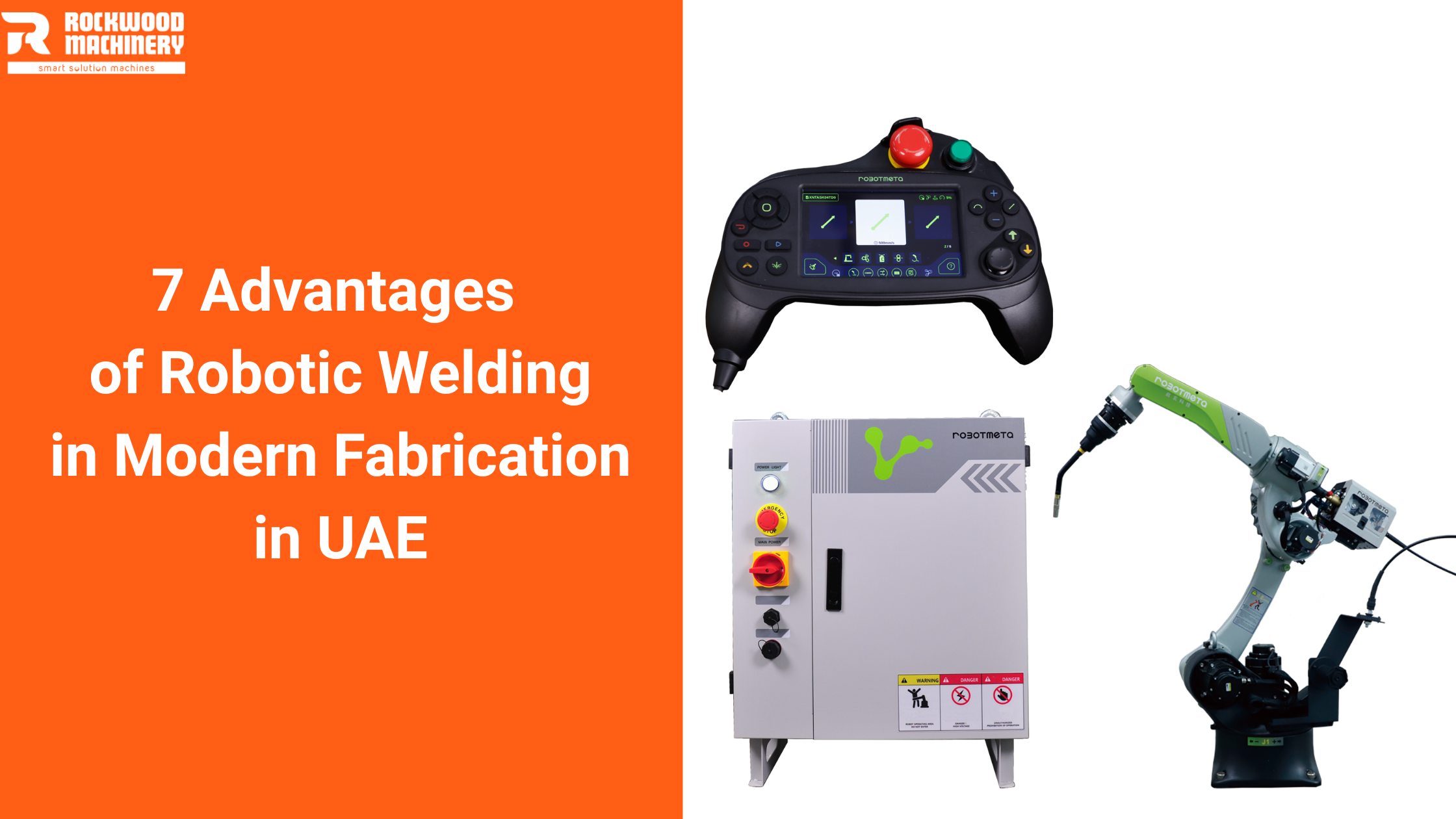
The steel fabrication industry in the UAE has been expanding rapidly due to the growth of infrastructure projects, industrial developments, and large-scale construction initiatives. From high-rise buildings and bridges to oil and gas facilities, modern fabrication projects require high precision, speed, and consistent quality. In this evolving landscape, robotic welding systems have emerged as a game-changing technology for fabrication companies.
Robotic welding systems use automated machines programmed to perform welding tasks with high accuracy and efficiency. By combining advanced sensors, software, and robotic arms, fabrication companies can achieve reliable welding results while improving productivity. For modern steel fabrication companies in the UAE, adopting robotic welding technology offers several significant advantages.
1. Superior Welding Precision and Consistency
One of the biggest advantages of robotic welding is the exceptional precision it provides. Unlike manual welding, which can vary depending on the operator’s skill and fatigue levels, robotic systems follow programmed instructions with extreme accuracy.
Robotic welding machines in UAE maintain consistent welding parameters such as arc length, travel speed, and weld placement. This ensures uniform weld quality throughout the production process. In steel fabrication projects where structural strength is critical, such as bridges, structural beams, and pressure vessels, consistent welds are essential for safety and durability.
Many advanced robotic welding machines can achieve repeatability of up to ±0.02 mm, ensuring highly accurate weld joints and improved product reliability.
2. Faster Production and Higher Efficiency
Speed and productivity are crucial factors in modern fabrication workshops. Robotic welding significantly increases production efficiency by operating continuously without fatigue.
Unlike manual welding, robots can work for extended hours with minimal interruption. Fabrication companies can run multiple production cycles or shifts, which helps reduce project timelines. In high-volume manufacturing environments, robotic welding can improve productivity by as much as 30–50%.
This efficiency is particularly beneficial for UAE industries involved in large-scale infrastructure, shipbuilding, and industrial equipment manufacturing, where project deadlines are tight.
3. Improved Workplace Safety
Welding environments often involve high temperatures, sparks, fumes, and intense light exposure. These conditions can pose safety risks for workers if proper precautions are not taken.
Robotic welding helps reduce these risks by allowing machines to handle hazardous welding operations. Workers can supervise the process from a safe distance instead of performing the welding manually. This significantly reduces exposure to heat, fumes, and other potential hazards.
For fabrication companies in the UAE, implementing robotic welding systems also helps support workplace safety standards and improves overall workshop safety conditions.
4. Cost Savings in Long-Term Fabrication Projects
Although robotic welding systems require an initial investment, they can provide substantial long-term cost savings. Automation reduces labor requirements for repetitive welding tasks and minimizes human error.
With consistent welding quality, there is less need for rework or repairs, which helps reduce material waste and production delays. Over time, fabrication companies can achieve operational cost reductions of up to 20–30% depending on production volume.
For companies handling large industrial projects, robotic welding provides a strong return on investment while improving overall operational efficiency.
5. Consistent Quality for Large-Scale Industrial Projects
Quality control is essential in steel fabrication, especially for projects involving structural components and heavy equipment. Robotic welding ensures uniform weld penetration and strong bonding between materials, resulting in reliable structural performance.
The consistency provided by robotic systems makes it easier to meet international welding standards such as AWS and ISO requirements. This is particularly important for fabrication projects related to oil and gas, construction, and industrial plants in the UAE.
By maintaining consistent weld quality across large production runs, robotic welding helps fabrication companies deliver dependable products for demanding industrial applications.
6. Flexibility for Complex Fabrication Designs
Modern fabrication projects often involve complex component designs and different material types. Robotic welding systems are highly flexible and can be programmed to handle a wide range of welding applications.
These systems can weld different metals, thicknesses, and joint configurations with minimal adjustments. Fabrication companies can also integrate robotic welding with CNC cutting machines and automated fabrication systems for streamlined production processes.
This flexibility makes robotic welding suitable for industries such as automotive manufacturing, shipbuilding, heavy equipment production, and structural steel fabrication.
7. Integration with Smart Manufacturing and Industry
Robotic welding plays a key role in the transition toward smart manufacturing and Industry. Advanced robotic systems can be integrated with digital monitoring tools, sensors, and data analytics platforms.
These technologies allow fabrication companies to monitor welding performance in real time, detect defects early, and improve production efficiency through data-driven insights. Smart welding systems can also track productivity metrics, helping companies optimize their fabrication processes.
As the UAE continues to embrace advanced manufacturing technologies, robotic welding is becoming an essential part of modern industrial operations.
Conclusion
Robotic welding is transforming the steel fabrication industry in the UAE by improving precision, efficiency, safety, and production quality. With the growing demand for high-performance structural components and large-scale infrastructure projects, automation is becoming increasingly important for fabrication companies.
By investing in robotic welding technology, steel fabrication companies can enhance productivity, maintain consistent welding standards, and stay competitive in a rapidly evolving industrial market. As automation and smart manufacturing continue to develop, robotic welding will play a vital role in shaping the future of modern fabrication in the UAE.
To learn more, click: How to Buy Hydraulic Press Brakes? Ultimate Guide