
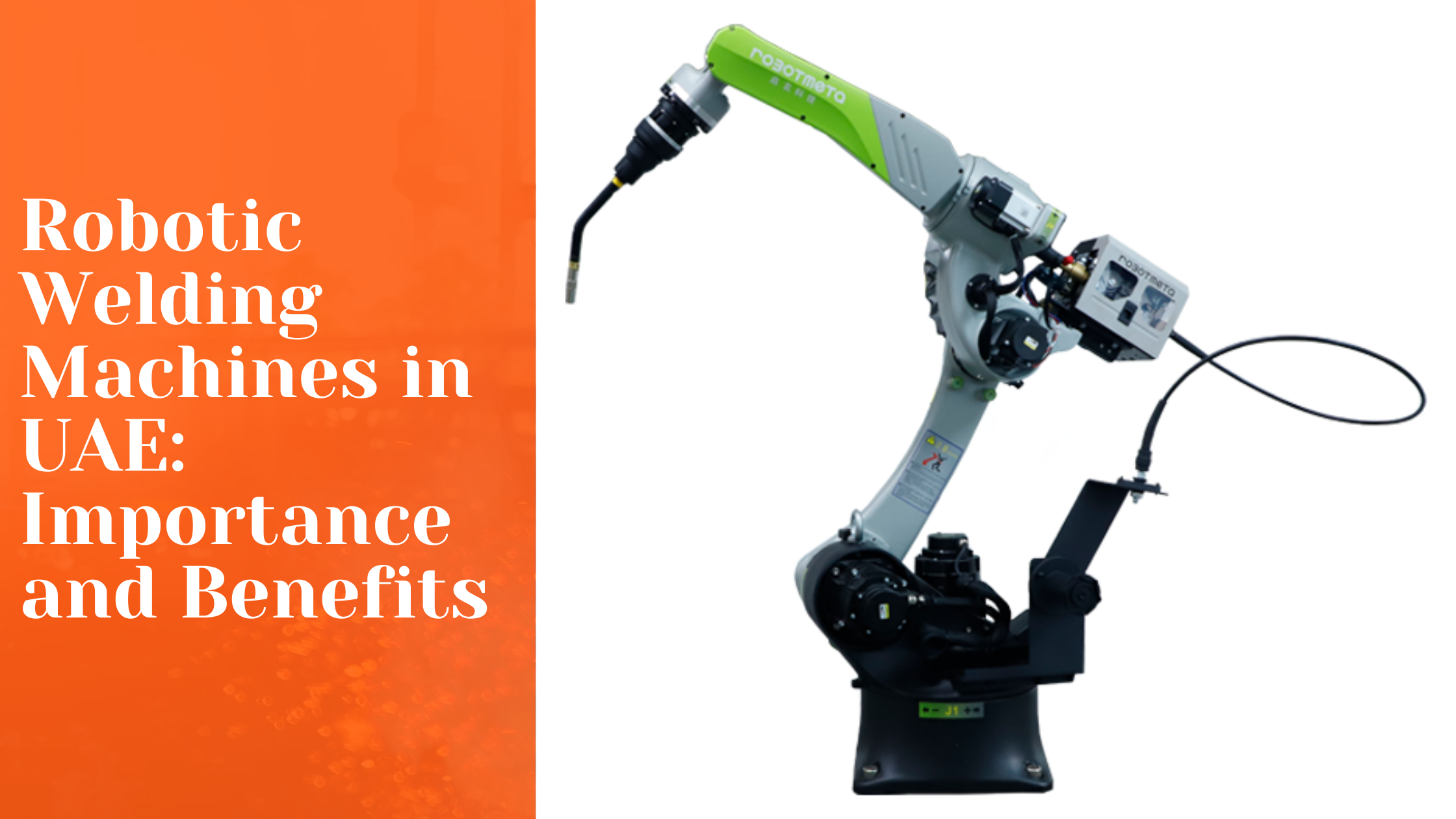
Robotic welding machines bring automation, speed, and precision into the metal fabrication industry, transforming the way workshops operate. These advanced systems use programmed mechanical arms that move with accuracy, consistency, and control—far beyond what manual welding can achieve. Just as ultrasonic cleaners utilize sound waves to achieve consistent cleaning results, robotic welders rely on automated motion and controlled energy to deliver uniform, high-quality welds every time.
At their core, robotic welding machines are engineered to handle repetitive welding tasks with minimal human intervention. They follow pre-set paths, apply consistent heat, and maintain stable arc conditions, significantly reducing human error. While a manual welder may encounter fatigue, inconsistency, or variations in technique, robotic systems operate with precise calibration, ensuring every weld passes quality standards.
In the UAE, industries such as construction, automotive manufacturing, metal fabrication, and oil & gas are rapidly shifting toward automation. This shift is driven by the need for higher efficiency, improved safety, and faster production times. As a result, robotic welding machines in UAE have become essential equipment for businesses looking to scale operations with accuracy and reliability.
Just like cavitation in ultrasonic cleaning forms microscopic, powerful shockwaves, robotic welders create carefully controlled welding arcs that penetrate metals with stability and exactness. Each movement is calculated, and each weld is deposited uniformly, making the process ideal for large-scale or repetitive fabrication requirements.
Robotic welding is especially valuable in environments where precision matters—such as when working with steel structures, pipelines, frames, or components that must fit perfectly during final assembly. Many fabrication workshops also integrate bending machines in UAE alongside robotic welding systems to ensure seamless workflow between cutting, shaping, and welding tasks, further improving efficiency.
How Robotic Welding Machines Work
A robotic welding system consists of multiple components:
- A robotic arm with high-mobility axes
- A welding power supply
- Sensors and controllers
- A workstation or jig
- Safety systems such as fume extraction and enclosures
The robotic arm is programmed with specific coordinates and paths. These instructions guide the torch to move, arc, and weld with precision. Real-time sensors adjust speed, position, and heat depending on the material’s thickness and joint type.
Just as ultrasonic machines rely on frequency, temperature, and cavitation intensity, robotic welders depend on programming, torch angle, voltage, and travel speed. Every parameter directly affects weld quality, making automation a superior solution for maintaining consistency.
Importance of Robotic Welding Machines
Industries in the UAE are under continuous pressure to increase productivity while meeting high safety and quality standards. This is where robotic welding becomes a game-changer.
1. Rising Demand for High-Volume Production
Construction and industrial manufacturing in the UAE require large quantities of metal structures, beams, pipes, and machinery parts. Robotic welding fulfills this demand by working faster and more accurately than manual welders.
2. Improved Worker Safety
Welding involves heat, fumes, sparks, and UV radiation. Robots handle hazardous conditions, allowing workers to focus on safer, more skill-based roles like programming and inspection.
3. Consistent Quality and Reduced Errors
Automation eliminates variations in weld shape, penetration, and speed. Every weld is identical, which is crucial for sectors that require structural integrity and certification.
4. Lower Operational Costs
While the initial investment is higher, robotic welders reduce long-term expenses by minimizing material waste, decreasing rework, and improving efficiency.
5. Integration with Other Fabrication Technologies
UAE workshops increasingly combine robotic welding systems with equipment like CNC cutting machines, laser cutters, and bending machines in UAE. This results in a streamlined workflow from raw material to finished product.
Benefits of Robotic Welding Machines
Robotic welding technology delivers numerous advantages across industries:
High Productivity
Robots can work continuously without breaks, completing welding tasks in a fraction of the time required manually.
Superior Accuracy
Their precise motion control ensures clean, repeatable welds even on intricate or complex joints.
Reduced Material Waste
Controlled heat and steady travel speed prevent defects such as burn-through or porosity.
Safer Work Environment
Automating dangerous tasks reduces workplace injuries and improves overall safety standards.
Scalability
Businesses can easily expand production by adding more welding robots or reprogramming them for new tasks.
Versatility
Robotic welding machines are suitable for MIG, TIG, spot welding, plasma welding, and other specialized processes.
Final Thoughts
As industries across the UAE continue to move toward automation and precision-driven manufacturing, the adoption of robotic welding machines in the UAE has become more important than ever. They enable businesses to achieve faster production cycles, consistent quality, and improved workplace safety. When paired with supporting technologies like CNC systems and bending machines, robotic welders contribute to a highly efficient and streamlined fabrication process.
Whether you are upgrading an existing workshop or building a modern fabrication facility, robotic welding systems offer a reliable and future-ready solution that enhances both productivity and profitability.
To read more blogs, click: How Customized Magnetic Lifters Transform Material Handling in UAE